Wednesday, June 9, 2010

Carne Cruda and Movia Puro at Enoclub in Alba

After three straight days of plodding through buffet lunches in a subterranean cafeteria following the morning tastings at Nebbiolo Prima, time for the post-tasting repast on the ultimate day of the event absolutely called for a break-out. With one of Alba's main squares only a short walk from the event headquarters and with the sun shining brightly on a late spring afternoon, al fresco dining seemed like just the thing. And my co-conspirators and I knew just the place.


We'd already stopped at Enoclub, located on the south side of Alba's Piazza Savona along with its sister restaurant/enoteca Caffè Umberto, for late night refreshments earlier in the trip. Enoclub's cafe tables, its eclectic, reasonably priced wine list and the promise of a satisfying lunch beckoned our return. Boy, am I glad we heeded the call.

And on the fourth day...
someone at Enoclub made the best damn carne cruda I've ever eaten.


As I've mentioned here before, I'm a fan of the traditional Piemontese dish, carne cruda. The rendition served at Enoclub is off-the-charts good. The full name of the dish on the menu at Enoclub is Carne cruda di vitello Fassone (macelleria Oberto di Alba). That's raw veal — Fassone is the famed Piemontese breed of cattle — from the butcher Oberto. I don't doubt that there are others, but Enoclub is the only restaurant I've visited in Piedmont that identifies the source of the meat they serve directly on their menu. I take that as a point of pride, pride that showed through in the incredible freshness and succulence of their carne cruda.

If you haven't tried carne cruda you might expect it to be rich and heavy. When done right, though, it's actually refreshingly bright and easy on the constitution. A little squeeze of lemon juice and a drizzle of good olive oil and man was it good. Writing about it now, I can't help dreaming of going back for seconds.

But what to drink? As much as I love Nebbiolo, I must say that after four days spent tasting 320+ examples of Nebbiolo from Roero, Barbaresco and Barolo (and that's just the morning tastings), I was ready for something of a different nature. When my companions and I spotted Movia's 2001 Puro Rosé on the list, we needed look no further.

Mauro Repetto, the talented and affable young sommelier at Enoclub, didn't flinch when we ordered a bottle of Puro to accompany our lunch. Nor did he miss a beat in disgorging our bottle — Puro is sold with the lees from its second fermentation still in the bottle — in the classic-to-Movia underwater method.

At nine years of age, the pinkness of this bottle of Puro Rosé was much more apparent in its disgorgement bath (see the third shot in the series above) than in the glass, but it was still fresh as a daisy on the palate. Its medium sparkle and crunchy texture proved a fantastic foil to the meaty savor of the carne cruda and seemed to work quite well with the rest of the plates on our table, too.


Those other plates were no slouches. The Tartare di Baccalà (at left) and Tajarin served at Enoclub were both fantastic.


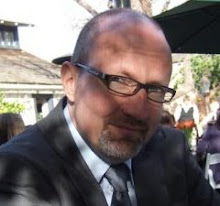
While I started with carne cruda then moved on to a theoretically lighter plate of pasta with pesto and shrimp, my buddy and fellow Nebbiolo Prima attendee, Wolfgang Weber, took the opposite approach. That's him above, caught munching on a piece of focaccia (even the bread was good). Wolfgang's starter of salt cod tartare was right on, a very nice opener to his second act, an absolutely killer plate of Tajarin. A fresh, thin-cut, egg yolk-rich pasta, Tajarin is another Piemontese specialty. The rendition at Enoclub, dressed with just the right proportion of meat ragu, had me wishing I'd gone the meat and more meat route when ordering.

The new bar and ground-floor dining room at Umberto/Enoclub is quite nice, contemporary in design, bright and inviting. I'm told the original restaurant, located downstairs, is stunning, but it was closed on both of my visits. No matter, though. On this visit, eating and drinking under the sun and sky was just right.

Caffè Umberto Enoteca Ristorante
and
Enoclub Ristorante
Piazza Savona, 4
Alba (CN) ITALY
+39 0173 33994

Tuesday, June 8, 2010

On 2006 in Barolo

After spending the first morning-and-a-half of Nebbiolo Prima surveying the 2007 vintage in Roero and Barbaresco, the final two-and-a-half days worth of big blind tasting sessions were devoted to the various communes of Barolo, largely to the 2006 growing season along with a handful of 2004 Riservas. Relative to our Barbaresco days, the challenges presented in the move to Barolo were no less daunting, the pain even more pronounced given the ever increasing muscle of the wines as we moved from the municipality of Barolo on day two through to Serralunga d'Alba on day four. Yet the overall outcome was more satisfying, more complete, more to my liking. 2006 does indeed seem poised to become a classic vintage for Barolo... but let me not get ahead of myself.

As is to be expected, some patterns did emerge over the course of the three days, especially in terms of general qualities and consistency from municipality to municipality. As in my report on Roero and Barbaresco, let's start with a list — yes, the dreaded list — of the wines that most appealed to my senses.


Barolo by Commune (and number of "normale" 2006s tasted):


Novello (7):

Barolo (43):
  • Barolo, Bartolo Mascarello 2006 (Barolo and La Morra) – wild and quite tannic, bright fruit
  • Barolo, Giorgio Scarzello e Figli 2006 – tar, dark flowers, classic color and nose
  • Barolo "Preda Sarmassa," Virna Borgogno 2006 – natty aromas, savory touch of brett, good structure and energy


La Morra (42):
  • Barolo "Rocchettevino," Gianfranco Bovio 2006 – classic color, pretty nose, sweet fruit
  • Barolo "Rocche dell'Annunziata," Rocche Costamagna 2006 – modern style, open, very well done
  • Barolo "La Serra," Bosco Agostino 2006 – ripe nose but balanced, long and textured
  • Barolo "La Serra," Eugenio Bocchino 2006 – perfumed, forward, fine structure

Verduno (6):

Castiglione Falletto (17):
  • Barolo "Rocche," Monchiero 2006 – rose, violet, tar... classic wine, cool texture
  • Barolo "Enrico VI," Cordero di Montezemolo 2006 – integrated tannins, high acid, elegant


Monforte d'Alba (36):
  • Barolo "San Pietro," Tenuta Rocca 2006 – masculine style, sweet mid-palate, grippy
  • Barolo "Bussia," Giacomo Fenocchio 2006 – compelling aromatics; long, tannic finish
  • Barolo "Big d'Big," Podere Rocche dei Manzoni 2006 – rich, modern style; good oak/fruit integration

Serralunga d'Alba (31):
  • Barolo "Serralunga," Palladino 2006 – masculine and a touch sauvage, classic Serralunga
  • Barolo "Margheria," Massolino 2006 – big and brawny but balanced, well done
  • Barolo "Cerretta," Ettore (Sergio) Germano 2006 – woody but integrated, well balanced, promising


Barolo Riserva (27 overall):
  • Barolo Riserva "Preda Sarmassa," Virna Borgogno 2004 (Barolo) – classic color and aromas, surprisingly soft, becoming
  • Barolo Riserva "Preve," Gianni Gagliardo 2004 (Monforte and Serralunga) – serious matter, rich fruit, long finish

Virna Borgogno was the only producer to have more than one wine emerge as a stand-out in my notes from the blind tastings at Nebbiolo Prima. In both cases, it was their Barolo "Preda Sarmassa," a blending of fruit from the crus of Preda and Sarmassa that is aged in a mixture of botti and barriques. Both the 2006 "normale" and the 2004 Riserva stood out for their character and expression, displaying fine balance along with a natural aromatic profile that appealed directly to my senses.


In simple terms, I was left with the impression that 2006 appears to have been a ripe but otherwise classic vintage in Barolo, producing a solid number and wide spread of wines that show elegance, power, and potential longevity yet with the possibility of pleasure for those wishing to drink in the near- to mid-term. I never recommend shopping by vintage but, for those for whom that's the easiest approach, you could certainly pick worse years in which to do so.

Digging deeper, the numbers and results above could easily be misleading if taken at face value. The communes of Barolo and La Morra, the largest in the Barolo zone, anted up with the highest number of bottlings so had statistics working in their favor. Indeed, of the 42 wines tasted hailing from La Morra, four of them were compelling enough to be included in my short list of favorites. Aside from those four, however, I found La Morra to be the least consistent of the major communes, the most prone to wines that showed over-ripeness, jamminess, over-extraction and/or a heavy hand in the oak department. The stuffing was there but, in far too many cases, the upholstery was just too flashy.

Over-ripeness seems to have been a common issue in Barolo itself in 2006, as well. While the majority of wines we tasted from the commune of Barolo seemed to be more comfortable in their own skins than did the wines of La Morra, looking back on my notes I find just as many references to alcoholic heat, stewed or over-ripe flavors, and overtly lush, opulent fruit. What was lacking in far too many cases was exactly what this commune is most know for: elegance. That said, the best wines, in particular the three highlighted above, were very, very fine and true to their origins.

Cutting to the chase, if I were forced under duress to pick a commune in which the 2006 vintage found its clearest, most complete voice, my gut reaction would have to be Castiglione Falletto, with Monforte d'Alba running it very close. In both of these sub-zones of Barolo, I found the greatest consistency of expression, along with the finest balance between elegance and power. Stylistically, as can be expected, the wines ran the gamut from old school to centrist to modernist in terms of oak treatment and extraction, but with a high level of success in all categories. Many producers I had the chance to speak with, particularly in Monforte, spoke of 2006 as a great vintage, among if not at the top of their "favorite vintage" list for recent years. I can see why.

Serralunga d'Alba was no slouch in 2006, either. This commune is known for producing the most muscular, masculine expressions of Barolo and that was in clear evidence throughout our tastings. If there's a downside to that, it's that some of the wines struggled to find a balance for all that power. Also, that masculine expression seems to draw to it a high percentage of modernist approaches in the cellar, with many producers trying to tame savage tannins by coddling the wines in newish or smallish oak. Happily, more producers in Serralunga seem to have gotten that balance right in 2006, and the best wines (see the short list above for a few examples) were truly delicious, and just a little more complete from my perspective than in 2004 and 2005.

* * *

Over the course of our four days of blind tastings, human nature inevitably led most tasters back to the same seat each day. That wasn't a bad thing, in this case, as finding a spot that's peaceful and comfortable goes a long way to helping you get through the tough task of tasting 75-85 Nebbioli at a sitting. I was lucky enough to find my spot (the empty chair in the pic above) at a table right next to Kyle Phillips and Tom Hyland, two well-respected journalists and two of the quietest, easiest neighbors in the room. I'm not sure I've ever seen anyone take such thorough, intensive notes in this kind of tasting format as did Kyle. Tom was no slouch, either, and was also good for an occasional update on hockey scores as the Philadelphia Flyers (my home team) and Chicago Blackhawks (his) both made their ways through the NHL playoffs.

Underpinning the innate fallibility and minimal utility of the large blind tasting format when it comes to appreciating or understanding single wines, I should point out (just as an example, not to single out any one producer) that as much as I enjoyed the Baroli of Virna Borgogno in the blind tastings, I liked the other wines from same producer's lineup less when tasted non-blinded at that evening's walk around tasting in the Castello di Barolo. Conversely yet to the same point, there were many cases where wines that I normally enjoy — from producers such as G.D. Vajra, Elio Grasso and Giuseppe Rinaldi in Barolo, and Cantina del Pino and Produttori del Barbaresco in Barbaresco, just to name a few — simply did not show well in the blind tastings. Some of those same wines showed beautifully, though, when tasted in situ during other portions of my trip.

Painful as was the experience of tasting all those wines in such quick succession, and as futile as it may seem in the context of true wine appreciation, I do think that the insight provided in this context in terms of the big picture understanding of vintage and commune serves a crucial function and was one of the most important aspects of Nebbiolo Prima. Personally, I'm happy to have seen some old favorites emerge among the highlights, and to have discovered some new producers — and opportunities for further exploration — along the way.

Monday, June 7, 2010

One Beautiful Glass

I'd hoped to publish my report on 2006 Barolo, as experienced during the blind tastings at Nebbiolo Prima, today. But it's not quite ready for prime time and I know trying to wrap it up this late, my energy and concentration fading, would not be for the best. Some of you may have noticed by now that I'm not going to win any prizes for being the world's fastest blogger. What can I say, I've always been more of an LSD guy than a sprinter.

What I can share with you tonight is one of my photos from the trip, taken during a visit that was a really lovely surprise. Major bonus points on offer to anyone who can guess where it was taken and/or what specifically is in the glass.

Sunday, June 6, 2010

Sunday Suds: Bike and Beer Edition

In the absence of an official Philly Beer Week/Philly Cycling Championships mash-up, it was easy enough to make do on our own. With a tent for just about every bike shop in the greater Philly area pitched across the hillside and a keg under most, there was plenty of sampling to be done by the more ambitious of the Lemon Hill denizens.

Me? I stuck with a cup or two of Victory Prima Pils, offered up by the ever ready Lee Rogers of my house shop, Bicycle Therapy. A perfect late-morning, sunny-day brew if I do say so, and a more than adequate accompaniment to the cheeseburgers flying off the grates courtesy of Grillmaster Brian Hackford, the man behind Keswick Cycle. Brian's been sharing a tent on Lemon Hill with the Bike Therapy crew for just about as long as I can remember.


There were no worries when the keg kicked, as I'd brought along a backup supply of Farmhouse Summer Ale from another local cycling supporting brewery, Flying Fish. Served ice cold and straight from the bottle, I must say it was tasting great on a hot afternoon (even if it is brewed in New York rather than at Flying Fish's own facilities in Cherry Hill, NJ).

Lest you think today's festivities were all about the beer, let me assure you... there were a couple of bike races in the mix, too.

The women's race, which runs concurrently with the men's, was animated from the get-go this year. As usual, it came down to a field sprint in the end, but a small one, as the front pack had been whittled down to a mere 15-20 riders.

The men's race followed a familiar pattern as well, with an early sacrificial break forming within the first couple of laps and staying out front, by several minutes at one point, until eventually being reabsorbed by the main field with a couple of laps to go.

By the time everything came back together, the effort of raising the pace toward the finale was really beginning to show on the faces and bodies of the riders. 156 miles in the saddle is a long day by any rider's standards. Add to that the early June heat on the streets of Philadelphia and what were the windiest conditions I can ever remember witnessing on race day, and you've a pretty good recipe for suffering.

In addition to the fact that it's just a great, relaxed location from which to check out race day, one of the beautiful things about Lemon Hill is that you can tell the riders really love the vibe, too. It's a stiff little climb, especially after multiple laps at race pace, but it's not so excruciating that the riders can't take in the energy of the crowd and the scene. And in the late stages of the race, especially as some of the riders start to come off the back of the field, it's a good place to witness the camaraderie that exists within the pro peloton...


...or to grab a beer and cool off a little before the long, lonely ride to the finish. About the only thing Lemon Hill doesn't provide is a view of that finish. So, if you were hoping for the lowdown on the day's results, you'll have to go here.

Saturday, June 5, 2010

Some People I Met Rolling Around on the Ground at Space 1026

For those waiting for my report on 2006 Barolo, I'll be back on the Piemonte trail in due course. On this most Philly of weekends, though, my attentions and wanderings turn closer to home. Last night, the ever present urge to explore my own city led me to a gallery on the edge of Chinatown, Space 1026, for the First Friday opening of a group Move exhibition, curated by artist, zine penner and Move founder Rich Jacobs. It seems Rich is a relatively computer-free kind of guy, so you can read more about him here, should you wish.

Rich made music, too. That's him at left, sitting in for an improv session with Texan Tim Kerr (or Noisemaker Tim, as my friend Bert likes to call him), in motion at top, and a cat from Baltimore who I met but damned if I don't have a horrible memory for names.

An indefatigable interest in eclectic, expressive art aside, what really led me to 1026 was the chance to catch up with a very old friend, Bert Queiroz. Bert and I spent a great deal of our late-teens and 20s hanging out together in and around the music scene in 1980s Washington, DC. We traveled to Europe together in 1986, the first time across the pond for either one of us, rolling around – from London to Leeds to Edingburgh, on to Paris, Nice, Madrid, Barcelona, Rome and Venice, Munich, both sides of Berlin, Amsterdam, then back to London – for the better part of the summer. I hadn't seen him in close to fifteen years, not since I left northern Jersey for Philadelphia. Through the wonderful, frightening world of social networking, we did manage to reconnect not long ago, and when I saw that he was coming to Philly to show some of his photographs in the Move exhibition I dropped him a line. The rest is last night's history.

Photographing the photographer with his photographs.

It was great to catch up with an old friend. Bert's photos in the show (below) were all scenes from a life: among them a self-portrait, Guy Picciotto in action, riot police in less pleasant action, and Coney Island, one of Bert's favorite shooting grounds.


Among the nearly 50 artists with pieces included in this installation of Move, the works of Tim Kerr were the most prominently represented. I never really knew Tim but when last I saw him, he was up to much different things, playing guitar for seminal Austin, Texas skate punk funkers, Big Boys. Though he did pick up an amplified six string for last night's gathering, I'm given to understand he leans much more toward the banjo these days, as well as to, quite obviously and strongly, the brush.

Sandwiched between the works of Bert Q. and Tim K. were more photographs from another old friend who was in for last night's event, Cynthia Connolly, who I hadn't seen in even longer than Bert. Those are a couple of her photo-documentary style prints to the left of Tim's works in the above shot. And below, that's her in the flesh, green t-shirted, right smack in the middle of what was meant to be a random shot of the room and crowd at Space 1026.

Funny thing is, my shutter captured not only Cynthia but at least a couple of other people I know from around town, or came to know over the course of last night. And it missed a couple of others. It's crazy what a small town Philly can be, and more wonderful yet how much can change over the years while so much else can stay so much the same.

Asa Osborne of Baltimore post-HC band Lungfish, performing under his solo-project moniker Zomes, closed out the evening's musical sit-ins with a few droning, darkly aggressive yet subtly melodic pieces on the electric keys and tape loops.

And closing out this evening's post, here's a little fun(k) from an earlier time.


Space 1026
1026 Arch Street, 2nd Floor
Philadelphia, PA 19107
215-574-7630

Friday, June 4, 2010

What, No Bike and Beer?

Mere hours before Mayor John Nutter drives home the official opening tap for Philly Beer Week and only two days until the 26th annual running of the Philadelphia International Cycling Championship through the streets of Fairmount Park and Manayunk, I have just one question for the organizers of the two events.

Why is there no joint bike and beer extravaganza???

I thought the whole point of moving Beer Week from its old place on the calendar in March to its new spot in June was so that it would coincide with Philly's big race day. Seriously! Come on, guys and gals. Have you ever seen Lemon Hill on race day? It's a beer week extravaganza waiting to happen. Add to that the fact that several local breweries sponsor equally local racing teams (Victory and TriState Velo; Flying Fish and the Mambo Kings), promote local races (the Iron Hill Twilight Criterium in West Chester, PA), or have their own cycling jerseys (see the Yards, Flying Fish and Sly Fox kits at GoCycling), and you'd think it would be a no-brainer.

I've been dropping hints left and right over the past year, yet I've perused the Beer Week schedule for Sunday not once but thrice and, nope, there's nary a mention of any crossover event. Guess I'll have to try harder next year (and carry my own cooler to Lemon Hill this year).

Thursday, June 3, 2010

The 2007 Vintage in Roero and Barbaresco

As I was saying yesterday, the large scale, focused format of the blind tastings at Nebbiolo Prima provided some definite insights into the qualities of vintage — with 2007 being the primary focus in Roero and Barbaresco — and of the broad sense of terroir associated with the various communes/municipalities of production.

Day one was devoted entirely to Nebbioli from the Roero as well as from the Alba, Treiso and Barbaresco municipalities within the Barbaresco production zone. We tasted sixteen wines from the 2007 vintage in Roero and fourteen 2006 Roero Riservas, followed by forty-eight Barbaresco from 2007 and five 2005 Barbaresco Riservas.

The second day of the event was split between Barbaresco and Barolo. We'll get to the Barolo on another day. This time it was all about Neive, with thirty-two Barbaresco "normale" from the 2007 vintage and three Riserva bottlings hailing from 2005 lined up on the big tasting table.

Getting straight to the fine details, here's the short list of wines that grabbed me.

Roero (commune):
  • Roero, Cornarea 2007 (Canale) – spicy, ripe, integrated
  • Roero "Bric Valdiana," Giovanni Almondo 2007 (Montà) – high-toned, minty, muscular
  • Roero "Bricco Medica," Cascina Val del Prete 2007 (Priocca) – ripe yet solid vintage expression
  • Roero Riserva "S. Francesco," Negro Lorenzo 2006 (Monteu Roero) – judicious wood; forward, pretty fruit

Of the wines that inspired me on the first day of blind tasting at Nebbiolo Prima, Giovanni and Domenico Almondo's Roero "Bric Valdiana" was the only one that I'd already been a regular admirer of in the past — unblinded and at home, albeit in earlier vintages.


Barbaresco (commune):
  • Barbaresco "Vallegrande," Fratelli Grasso 2007 (Treiso) – dark but well done
  • Barbaresco "Tre Stelle," Cascina delle Rose 2007 (Barbaresco) – classic, delicate, floral
  • Barbaresco "Campo Quadro," Punset 2007 (Neive) – burly but complete, balanced

The 2007 Barbaresco "Tre Stelle" from Cascina delle Rose was a real stand-out for me, while the "Campo Quadro" from Punset pleasantly surprised.


Barbaresco Riserva (commune):
  • Barbaresco Riserva "Nervo Vigna Giaia," Piazzo Armando 2005 (Treiso) – fine structure, elegant
  • Barbaresco Riserva "Serraboella," Massimo Rivetti 2005 (Neive) – prettiest nose of the day


Not a bad little list, one that offered up some nice discoveries for me. When you look at what it took to cull it, though, those are some pretty slim pickings.

I didn't invite you here to put you through basic arithmetic exercises, so I'll crunch the numbers for you. That list represents a meager selection of nine wines out of the 118 tasted. It looks even starker when you break it down. Four out of thirty wines in Roero; actually, that's not all that bad. But that leaves only five wines from Barbaresco out of 88 wines tasted. And only three of those five were from 2007, which was the main vintage we were invited to Alba to taste, at least in terms of Roero and Barbaresco.

The translation? The 2007 vintage was presented to us, in day one's opening presentation by Enzo Brezza, current president of the Albeisa producer's consortium, as a year that started with a mild winter and early budding, followed by a dry, hot growing season and a relatively early harvest. Not as extreme as 2003 but still a hot, dry year that produced higher alcohol levels and lower acidity than typical.

In the Roero, generally speaking, I didn't find the difficulties of the vintage to be a tremendous issue. Most of the 2007's I tasted were fruitier, slightly more alcoholic and, indeed, lower in acid and more softly structured than their 2006 counterparts. But overall, the wines fared reasonably well, as reflected in my findings with our sample population.

My general experience in Barbaresco, however, is that 2007 proved, as shown in the large number of wines tasted, to be quite a difficult vintage.

Over and over again, particularly in Treiso and Barbaresco, I encountered wines that displayed very ripe, flamboyant fruit along with sweet, herbal and weedy aromatics and flavors. My impression was that sugar content had surged to levels that required harvesting before the other aspects of the grapes had a chance to catch up and create any possibility of completion and harmony. When asked of my experiences, at our dinners or during winery visits, I shared this interpretation with several producers, none of whom came right out and agreed but none of whom said much if anything to dispel the idea, either. What I did hear repeatedly, from producers throughout the various regions, is that 2007 was a great vintage for Barbera (a variety that is more naturally inclined to thrive in such climatic conditions).

Moving ahead to day two and the wines of the Neive commune of Barbaresco, I can't say that I found the big picture any more to my liking. Though the sweet-and-sour signature I'd found in so many of the wines from Treiso and, to a slightly lesser extent, Barbaresco wasn't quite as obvious, there was a much higher prevalence of over-extraction, heavy oak treatment and high alcohol. Again and again, words like "jammy," "bourbon," "sweet," "overripe" and "forced" appear in my notes.

I'll be curious to see how the mainstream press reacts to the 2007 vintage in Barbaresco, as I expect it stands a good chance of being well-received in a manner similar to other ripe, hot vintages in recent history, such as 1997, 2000 and 2003. For me, based at least on our rapid-fire albeit extensive tasting, 2007 will be a vintage where knowing your producer and selecting with care will be of utmost importance.

Fast-forwarding a year, it should also prove interesting to see how the same vintage characteristics affected the wines of Barolo. In the shorter term, stay tuned for my thoughts on the 2006 vintage in Barolo.

Wednesday, June 2, 2010

Nebbiolo Prima: My Thoughts on the Blind Tastings

In case the name doesn't make it crystal clear, Nebbiolo Prima was devoted at heart to rolling out the most recent vintages of Nebbiolo, specifically from the Albeisi zones of Barolo, Barbaresco and the Roero. Though the participating wineries all grow other wines, from Dolcetto to Freisa, Arneis to Nascetta, and were able to show such wines during estate visits, at walk-around tastings and/or over dinner, the big blind tastings that constituted the prime focus of each day were devoted exclusively to the Nebbiolo. Nothing but Nebbiolo.


With 189 participating wineries and over 320 wines in the mix, that meant that we on the press side of the event were in for some serious oral pain to begin each day. Four hours (or less, for those fleet of palate) of blind tasting, four days in a row, with an average of just over 80 high acid, high tannin wines per sitting. It was highly educational in a broad sense, but fun it was not. This was work, my friends, no matter how you sliced it.

As you can see from my shot above, the tasting was not 100% blind. We were provided with a basic spreadsheet indicating where and from what vintage each bottling originated. Tasting order was broken up by commune, with Riserva bottlings always saved for last within each major regional grouping. I must say whoever put together the order did a fine job of ensuring both a sensible progression and, equally important, an unpredictable curve in terms of style and quality.

There was nothing sensible, however, about pouring 80+ wines at a sitting. Even the most battle practiced tasters in the room, as well as the most enthusiastic, concurred that those numbers, and their cumulative effect on one's palate, were simply daunting. Adding a fifth day, something the promoters have already promised to do starting next year (and something I understand had been the norm in past editions of the Alba Wine Exhibition), would go a long way to easing the pain and to creating the possibility of enough time in the day for journalists to get a little on-site "live blogging" or correspondence done.


All of that tasting – 80 wines a day for 70 people spread throughout three rooms – could never have come together as well as it did if not for the fine and quietly anonymous work done by the participating members of the Associazione Italiana Sommeliers. These guys and gals, just a few of whom are pictured above, managed to make sense of my weak attempts to speak Italian, to pour by the numbers, to work on their feet for hours at a time each morning, and to do it all while wearing smiles (albeit subtle ones).

I've said it here before but it bears repeating: tasting this many wines at one sitting is no way to really get to know any one wine. A system of basic check marks and quick, concise notes are about the best I could realistically put into practice. For me, that meant recording my honest, immediate impressions of each wine, and placing a star next to the wines that really captured my attention so that I could return for a second look to ensure my first impressions carried through.

What I was looking for really shouldn't surprise any of you. Not power and opulence, not ferocious tannins that theoretically promise longevity, but rather finesse, balance, drinkability (whether now or later) and voice. If the wine spoke to me and I enjoyed what I heard, great. If not, then on to the next wine I went.

Does that mean I missed some good wines? Absolutely. I can promise that's the case for every taster in attendance, regardless of their personal preferences or the thoroughness of their note taking.

What large scale, rapid-fire blind tasting is good for, especially in a focused format such as this, is getting a handle on vintage characteristics and the commonalities of expression (if any) from area to area. I'm generally not one to pronounce on vintage, as I find the influence of the producer to be much more important – and vintage proclamations to be a crutch used by the major wine press and major marketing organizations to help sell units, be they wine or magazine subscriptions. Of course, vintage does play a role in defining the qualities of honestly made wine and, tasting dozens of wines from the same place and vintage in one sitting is a sure way for vintage and terroir to make their qualities known.

What's my point? I find it important to lay down groundwork, to make my approach clear, so that when I do post notes and/or general observations about specific wines, vintages or regions, readers here — newcomers and veterans alike — will have as full a sense as possible of where I'm coming from.

I'd originally intended for this post to include my thoughts on the wines tasted during day one of Nebbiolo Prima; however, given the length of my prelude, I think it best to save those impressions for a separate post. So, please forgive me my ramblings and consider this the introduction to what's to come in the next couple of articles: my reactions to 2007 in Roero and Barbaresco, and 2006 in Barolo.

(PS: I'd love to be able to attach names to the faces of the sommeliers pictured above. If anyone out there knows or can identify any of them, please do let me know.)

Tuesday, June 1, 2010

Nebbiolo Prima 2010: An Overview

It's been a little over a week now since I returned stateside from my adventures in Piedmont. With the better part of that week devoted to recovering, digesting and mulling over of all the finer points of the trip, it's about time that I get down to the business of sharing some details.

Outside the entrance to Alba's Palazzo Mostre e Congressi, which served as the base site for Nebbiolo Prima 2010.

The impetus for the trip was an invitation to attend an event called Nebbiolo Prima as a member of the press. I have to say I was psyched to be invited and, in the end, even a little proud to have been included among the group of international journalists who'd been invited to participate. Hell, I was actually surprised at first, so much so that when the invitation originally showed up in my email box, its full import didn't really register. I thought it was just a press release notifying me of the event. Like most of my comrades in wine and/or food blogging, I get dozens of such notices on a daily basis. It wasn't until the event organizers followed up with me that I realized I was being invited to attend.

"Hell yeah, man, I'm going to Piedmont." The invitation provided me with the opportunity to return to a region I'd been dying to revisit since my first and only time there in early 2006. To be clear, I should reiterate that the invitation included airfare as well as a hotel room and meals for the duration of the four-day Nebbiolo Prima. As with my similar trip to Paso Robles earlier this year, I hold myself accountable, and to a high standard I'd like to think, for editorial integrity. All expenses prior to and following the event were my own responsibility; in other words, I took the opportunity of being there to add on a few days to do my own thing. We'll get to that part of the trip in due course but, for now, I'd finally like to tell you a little about Nebbiolo Prima itself.

Enzo Brezza, current President of the Albeisa producers' consortium.

The 2010 Nebbiolo Prima was in one sense a first-time event but in the larger sense a rechristening and repackaging of the 14 year-old Alba Wine Exhibition. Under the aegis of Albeisa, the producers union for the Langa and Roero regions, and its new president, Enzo Brezza, this year brought a shift to a new PR/organizing firm for the first time in 15 years and, with that shift, a subtle reimagining of the scope of the event. Much was being made and spoken behind the scenes of this shift in organizers. Not having attended in the past, though, I really can't comment on the politics or qualitative aspects of the move. The new organizers, a Veneto-based PR firm called Gheusis, did what seemed to me a fine job. Communications leading up to and through the event could have been more thorough but, in the end, everything came off without a hitch, so I really can't complain.

This year's event was broken into two separate and distinct programs, one for journalists (of which about 70 were in attendance) and one for buyers (40-50 attendees). The event spanned four days, with each day on the press side of the camp broken out according to a simple if fully packed program, which looked something like this:

  • 8:30 AM to 9:00 AM — opening comments
  • 9:00 AM to 1:00 PM — blind tasting
  • 1:00 PM to 2:00 PM — buffet lunch
  • 2:00 PM to 4:30 PM — visits with local producers/wineries
  • 5:00 PM to 7:00 PM — walkaround tastings with producers
  • 8:00 PM to 11:30 PM — dinner with producers at a regional restaurant

What little spare time might appear in the couple of 30-60 minute gaps in that schedule were essentially taken up by transportation needs, or simply by taking a moment or two to breathe. Blogging: forget about it. Checking email: barely, especially given the spotty Internet access at the event site and my hotel. Finding time to grab a beer, something that's much needed after tasting 100+ Nebbioli per/day: rarely and barely.

Things actually kicked off on Sunday night the 16th of May with an opening reception in Alba's Piazza Savona, and closed on Thursday the 20th with an evening party at the newly constructed Castello di Barolo in Barolo. I opted to miss both of those affairs in favor of opportunities to take on extra producer visits. Otherwise, though, I did my best to stick with the official schedule, especially when it came to the morning blind tastings and the afternoon producer visits, by far the two most important and educational parts of the event from my perspective.

The new Castello di Barolo, as seen from the municipal parking area in the town of Barolo (above) and from the rooftop observation deck at Borgogno (below).


In the next few days, I'll cover the ins and outs of the big blind tastings at Nebbiolo Prima, as well as provide a few highlights from each day's lineup. From there, it'll be hunkering down to the more intense business of putting together producer profiles from the nearly 20 wineries I visited during my stay. Wish me luck (and grant me patience), my friends. And thanks as always for reading.
Blog Widget by LinkWithin