Showing posts with label Guest Blogger. Show all posts

Friday, October 15, 2010

Luna, Nebbia and Alba Over the Bricco delle Viole

Here's a second consecutive post in the déjà vu all over again department. I'm guessing that close to half of those reading this will already have seen the above photo courtesy of my pal Jeremy, who posted it this morning over at Do Bianchi. What can I say? The picture is just too beautiful not to share as widely as possible.

The image was sent to the both of us by our mutual friend, Giuseppe Vajra, scion of the G.D. Vajra estate in Barolo. You really do need to click on the photo to view it in its full glory. I don't often upload photos in unedited/uncompressed format but with this it was a must. Giuseppe snapped the shot in the wee hours of the morning, at 6:35 AM to be exact, on October 5, 2010, from the western slope of his family's plot of the Bricco delle Viole vineyard.

From A Wine Atlas of the Langhe:
"Bricco Viole belongs to the district of Vergne di Barolo and its charming name (literally, 'violet hill') is a reminder of the flowers that bloom here in springtime. And of course, violets are very much part of the aromatic profile of Barolo. This great vineyard can be clearly seen from the road that leads from the centre of Vergne to La Morra."
I love the way Giuseppe's photo gives no indication whatsoever that the terrain is one defined by vines, yet it nonetheless captures the essence of the Barolo landscape. Rugged but peacefully rolling hills and the valleys between them, the fog ("nebbia" — you'll see it in the depression between the slopes when you enlarge the photo) so omnipresent in the area, and the influence of both the sun and the moon on the land beneath... they're all there. The color of the sky, too, is simply enchanting; perhaps closer to indigo than violet on the ROYGBIV spectrum, but close enough to lend a poetic nuance to the photo's subject.

If you've any doubt of what I'm talking about, just compare Giuseppe's wee-hours photo to the mid-day shot directly above, taken by one of my traveling companions, Eric Tuverson, during a visit with Giuseppe's father, Aldo, in February 2006. The perspective is different but the flow, the hills, the essence are the same. Also, bear in mind that Alba, the name of the city central to the overall Barolo zone, literally means "dawn" in Italian. While Giuseppe and Aldo produce a single vineyard Barolo from their plot of Bricco delle Viole, their flagship Barolo, a multi-vineyard blend from parcels in Coste, Fossati and La Volta, is called Albe — "the dawns."

I truly do love Piemonte; there's something about it that just pulls me in, makes me feel rooted, at home. Thanks for sharing, Giuseppe. This is as much your post as it is mine, my friend. Un abbraccio!

Friday, July 23, 2010

TDF 2010 Stage 18: Salies-de-Béarn to Bordeaux

Joe Manekin authors Old World Old School, a most excellent blog about wine, food, music and pop culture. Read it, dang it!

Allow me to begin with two confessions.

First, I have not yet watched any portion of the 2010 Tour de France. I have been catching up on the various stage results, strong individual performances, strong proclivity towards acts of douchery (this is a real word, by the way -just like 'hateration' or 'dancery') by a certain Spanish cyclist. Anyway, I have yet to really get into watching the Tour and 2010 does not appear to be the year to change that. Not sure if McDuff would have accepted this post had he known this, but I shall do my best to hang with the rest of the contributors and their wealth of cycling as well as geographic and vinous knowledge.

Second, up until a few nights ago I had never drunk an Irouléguy. Tasted, yes, but drunk, no. I admit that over the past several years, I have shown lots of love for wines from Euskadi South (Spanish Basque country) while not drinking nearly enough from Euskadi North (French Basque Country).


Stage 18 starts from Salies-de-Bearne, which lies about 61 kilometers east of Bayonne, the closest city proximate to the Irouléguy AOC. Granted its status as an AOC in 1970, Irouléguy is the westernmost AOC region in France, literally a stone's throw from the Spanish border. In fact, San Sebastian, Spain is much closer to Irouléguy than it is to this stage's destination city, Bordeaux. Vines are planted along the slopes of the Pyrénées mountains surrounding the town of St. Jean Pied de Port and eight other villages that make up the region of Irouléguy. Vineyards are south facing on hillsides with fairly steep slopes, and therefore they are often terraced. Tannat is the star grape, and it is typically blended with cabernet franc and cabernet sauvignon. If you are thinking that tannat reminds you of the word tannin, then you would be correct; the wines composed of tannat, specifically those from the Madiran AOC, can be noticeably firm and tannic. In fact, the technique of micro-oxygenation as a means of reducing the perception of tannin in red wine was originally developed here.

Earlier this week I opened two bottles of Irouléguy rouge, which presented significant enough stylistic differences to make them good studies over the course of a few days. days. Two Irouléguy from two different vintages, imported by two excellent locally based importers (Charles Neal and Kermit Lynch, respectively), primarily drunk over the course of two nights.

About the closest to regionally typical food I had to accompany these wines was an eggplant heavy variation on a pisto, with healthy amounts of flat leaf parsley and garlic, as well as a smattering of arugula and pimenton, to brighten and embolden the dish. I also whipped up some kale sauteed with garlic, garbanzos and bacon (sort of a riff on a Cal Pep dish which I quickly discovered and whipped up thanks to the internets). For night two, I roasted chicken. There was also petit basque cheese on the second night.

Photo courtesy of Cherries and Clay.

Let's start with the 2006 Domaine Ilarria Irouléguy. Proprietor Peiro Espil owns six hectares, primarily of tannat but with some cabernet franc and a bit of cabernet sauvignon. The vineyards are farmed organically and are certified by Ecocert. This wine is truly a delight to drink: red fruited, a bit savory in a spicy (think paprika) and subtly green vegetal kind of way. There is wonderful minerality and a freshness that make it terrific with food; even on the second day this wine was showing terrifically. Honest, traditional Bordeaux comes to mind if you're looking for something familiar as a frame of reference. Just a bit lighter and more mineral. Somewhere between humble, traditional, well made Bordeaux and a good Chinon is stylistically where this wine lies.

Photo courtesy of Manuel Camblor.

The 2005 Domaine Etxegaraya "Cuvée Lehengoa" is clearly a bigger wine. Composed of 80% tannat and 20% cab, from 150 year old vines, this is richer and black fruited on the nose. The wine also has a wonderful lavender like florality to its aromas and building inner mouth fragrance. Initially it struck me as the more impressive and serious of the two Irouléguy. It also revealed itself to be more extracted and woody; wood tannins might be a bit much for some drinkers who prefer less of an overt oak influence. That having been said, while I did not empty this bottle as quickly as the Ilarria (always a surefire way to determine preference), this wine still went very well with food, even the difficult to pair tomatoey pisto.

Back to cycling and TDF. Stage 18 is a flat one - 198 km of flatness. A good thing after all the climbing which the riders have had to endure over the past several stages, particulary up the grueling Col du Tourmalet. It looks like Alberto Contador, aka "la bolsa de ducha," all but has the tour wrapped up. However, this is an important stage as it relates to team standings, so we'll see what happens.

Up next: yes, we might actually speak of Bordeaux.

Wednesday, July 21, 2010

TDF 2010 Stage 16 Revisited: Where's Ulrich?

For your rest day reading pleasure, a look back on yesterday's Stage 16 by Karen Ulrich, author of Imbibe New York and, like me, a "retired" regional bike racer.

It’s been a few years since I’ve followed the Tour with fervor—the same number of years since I sold my Zipps to study wine. For four to five seasons I raced, following the wheels of a one-year romance with my first road bike. Racing became everything, and then, worn from training and competition, I picked up the bottle to study and started to run.

“Andy Shleck is out for blood,” the announcers state and set the tone. Eight seconds behind Contador, who took the yellow on Andy’s mechanical, Schleck begins the race with a protest, situating himself in the back of the pack.

I’m glad to see that Andy’s got game.

Though so out of the loop, my Comedy Central team bike still hangs from the rack. Cannondale System Six. I open a bottle of Chateau Jolys Jurançon Sec "Terrae Escencia" 2007, as the lead group of ten shatters the peloton and begins to climb. Up Col de Tourmalet—2,115 meters of grind. Armstrong, Vinokourov, Sastre—the old names are still players, but I miss Jan. Yearning for Ullrich—and not for name’s sake—I think back a few years and swirl the straw yellow contents of my glass.

Jurançon—nearly 2000 acres of vineyards dot the foothills of the Pyrénées near today’s finish line at Pau. Undetectable from the motorcade, vines on steep inclines produce Petit Manseng, Gros Manseng, and Courbu. The thirty-fifth time I hear Armstorng’s name mentioned, I lift my glass. Floral lemon with a whiff of chalk and a touch of licorice—the acidity sears as they begin their descent around technical bends—fearless at 62 mph.

Jurançon Sec is typically made from Gros Manseng, while Petit Manseng is reserved for the production of sweet. Climbing the Col d’Aubisque, Armstrong and Barredo go off the front. Fedrigo follows. Damn that’s got to hurt. Another acceleration by Armstrong on a 7-8% grade…where’s Ullrich? Lungs afire, legs screaming, deplete. The Chateau Jolys finishes with an ocean mist that coats my tongue with salinity. Watching, I break a sweat. Armstrong dons a poker face. I always found it difficult to think in this state, which made it hard to react. Chess played at high speed, my teammate Sarah used to say. And so I favored time-trialing, the individual’s race against time.

Slapped in the face by flags flown in the crowds, the riders peak Aubisque and begin their descent. Barredo rips down the mountainside and now they are five. Watching, I recall a few memorable descents—at Bear Mountain, Fitchburg’s Wachusett Mountain Road Race, and Housatonic Hills. It’s no small feat to fold oneself inside the pack at 50 mph, while maintaining position for the next ascent.

En route to Pau, I watch the terrain for vineyards without a glimpse. Rocky mountains and verdant grass. Somewhere off in the distance vines grow, but for now I return to my glass. Peloton +9:07, with Contador and Schleck tucked safely inside the pack. At 44 km to go, Barredo attacks—time-trialing his way home—5-4-3-2-1 km to go, Barredo gets caught. I feel for the guy, but that’s the nature of the sport. Sometimes you flat or crash, only to watch your goal race for the year slip through the cracks…a year’s worth of training for that A race and now you’re done.

Rooting for Schleck, I hope he takes his 8+ seconds back. As Contador steps to the stage to accept his yellow, boos from the crowd emulate and indicate that I am not alone.

Colette, a writer who knew her men, fancied Jurançon—its steely sec known to encourage thirst, leaving one’s appetite whet and forever wanting more….

Saturday, July 17, 2010

TDF 2010 Stage 13: Rodez to Revel

Up today is Ben Wood, gypsy jazz guitarist, cycling enthusiast, wine buyer at 67 Wine, and all around good guy.


Hi all,

Today I'm honored to be guest posting on David McDuff's blog. He has covered the Tour De France in a vinous way for the last several years. We managed to have him up to 67 wine for a tasting last week (while the race was in the Jura region). Today, I am writing about Stage 13 from Rodez to Revel. The course for this day is a fast rolling romp through the southwest part of the French countryside. The riders roll quite near to one of my favorite wine regions, Gaillac, and also pass Fronton, another great wine region in the southwest of France.

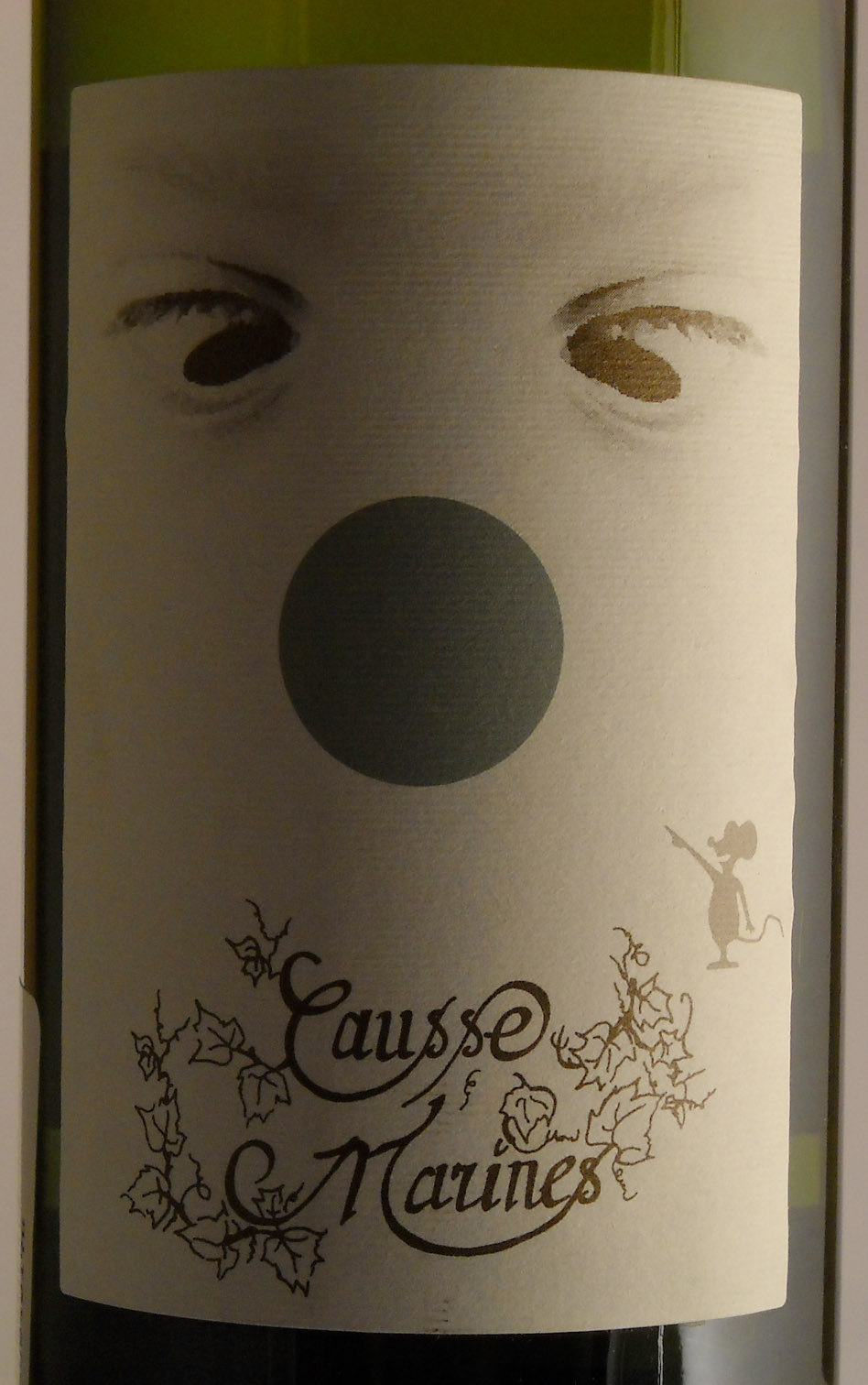
Unlike the stereotypical professional cycling racer, these wines are not steroidal monsters with chemical injections (kidding). The wines are, however, racy, controversial and fascinating. All of the great wines of these areas are made from native grapes that grow for the most part only in the southwest. Fascinating grapes like Braucol and Duras for red wines; Ondonc, Mauzac and Len De l'El for white and sparkling wines. These are unique grapes rescued from obscurity by winemakers like Patrice Lescarret at Domaine de Causse Marines.

These are wines of whimsy, interest and intensity. A member of the "vins naturels" movement, Lescarret practices organic farming with some biodynamic ideas as well as extremely minimal intervention in the cellar. The wines are focused on the native grapes in the region and include a cuvee named "Les Greilles," an AOC Gaillac made from all of the local grapes. A beautiful crisp white wine with honeysuckle and mineral notes, dry on the palate and refreshing, one of my favorite wines to drink.

There are some telling images on the label:

(the saluting mouse, and the no badger symbol) involving the personal mythology (M. Lescarret is called the mouse, and badgers hunt mice . . . This was the story I was given. A good mystery for you!).

A second wine from Gaillac that I love is made by Brigitte and Alain Cazottes of Domaine des Terrisses. Racy and good, the red from this estate has proven to be one of our best selling wines. The grapes are farmed biodynamically, and the soil site has quite a lot of clay (up to 60% in some parcels); because of this the wine comes through with strong aromatics and great flavor. Firmly in the Syrah camp, this wine smells of garrigue (a bit) and dark red fruit, with soil-y mineral notes and a hint of game. Beautiful and complex, it is racy and thirst quenching with just enough weight to make you know it is wine!

Tomorrow will be a fast and hopefully interesting stage as the riders pass some very great vineyards. Makes me wish I was there to eat the food, drink the wines and cheer on the riders!!

Up next: your guess is as good as mine....

Thursday, July 15, 2010

TDF 2010 Stage 11: Sisteron to Bourg-lès-Valence

Today's post comes to us courtesy of Claudine Knapp, author of the blog Real Nobody's Like Us and a regular contributor to Bonjour Paris. 2010 marks Claudine's fourth year of following Le Tour via her daily series of posts on French cuisine.

While I am trying not to have a panic attack that we are now on the downward slope to the end of the Tour de France I will soak in every one of these last ten stages. Today the Tour leaves the Alps behind and starts to head southwest to the Pyrenees. After the last few days in the Alps, today’s stage at times looks like a lovely stroll through the park on a Sunday afternoon. It will be a day for the sprinters so it will be fast and the GC contenders will stay back in case of pileups which this year’s Tour has been filled with.

The start town of Sisteron is known as the “Porte de la Provence,” the Gateway to Provence, but this year it will be just a quick pass through. Each year the Tour de France flips between clockwise and counter clockwise, this year we are moving in a clockwise pattern. Sitting on the banks of the River Durance and in-between two mountain ranges the town of Sisteron is more familiar with the “Race to the Sun” Paris-Nice. As with most of the towns and villages in this part of France, Sisteron was first settled by the Romans and left their mark on a rock near the town. In 118 BC, Gnaeus Domitius Ahenobarbus built a road that would like Spain with Italy. Traveling through the Alps at the Col de Montgenevre, through the valley of Durance, the stage town of Sisteron, across the River Rhone through Nimes and then along the coast to Spain. Paved with cobbles the Roman road is also said to be the same route used by both Heracles and Hannibal.

It was another historical character that would also make a large impact on the town, Napoleon Bonaparte passed through the town on his way from the Island of Elba, before he reached Laffrey that was on yesterday’s stage as well. On March 8, 1815 when Napoleon was making his way to retake his seat of power he and his troops came upon Sisteron. Since it was being held by the Royalists he knew it was essential for him to defeat them so he can move on. Napoleon and his General Cambronne and the more than 600 soldiers took over the city from the Royalists and were allowed to advance through. Eighteen days after his arrival on the shores of France, March 19th he was back in Paris. But he would not stay in power long, 100 days after his arrival to France he would be defeated at Waterloo. The Citadel of Sisteron dates back to the 12th century, with additions being made in the 14th century and again in a large renovation in the 19th century. Within the citadel there is a room dedicated to Napoleon with more the 50 items marking his return from Elba in 1815.

The Drôme department of the French Alps region gets its name from the River Drôme that is a tributary of the River Rhône. Flowing more than 68 miles and through the stage 10 towns of Die and Crest before meeting the River Rhône again in Loriol-sur-Drôme near Valence. In the heart of the Provencal Drôme region it is the mix of agriculture, wines of the Hermitage and Clairette de Die and the Nyons oil and truffles that give the area its distinction above many others. Nyons is known for one thing, olives. Because of its location at Les Baronnies, which is the region East and North of Mont Ventoux and just under 775 square miles in size it is protected from the Provence Mistral winds and makes a perfect place for growing olives. There are more than 250,000 olive trees in the area and will produce over 420 tons of olives for eating and 200 tons of olive oil per year. Nyons received its AOC distinction in 1994 for the Tanche olive, which is a sturdy olive with a large pit and a sweet meaty flavor. The appearance of the Tanche olive is black and somewhat wrinkled due to the fact that they are harvested in December and they have fully ripened and began to shrivel in the cold weather. Italy may be more recognized for Olive Oil, but some of the best ones come from France (would I say anything else?).

The town of Die, pronounced like the letter D, was home to the French Catholic diocese until the French Revolution put an end to it but the Die Cathedral still stands there today. Built over Roman ruins from the 11th to the 13th century only to be destroyed in the 16th century, in 1777 it was rebuilt from the local red sandstone and today the stone pulpit that dates back to the 13th century can still be seen in this lovely church. Die sits southeast of the well known wine growing region of Rhone and is well known for its sparkling wine Clairette de Die. Like most of the great products of France, the Clairette de Die under an AOC distinction. It was first given the Appellation d’Orgine in 1910 and the Appellation d’Orgine Controlee in 1942 the wine must be made mostly of Muscat Blanc à Petits Grains grapes, 75% and 25% of the Clairette grape that make of the Clairette de Die under its distinction. The Clairette de Die is best served young and chilled and the flavors of stone fruits and aromas of honeysuckle and roses round it out nicely. The Cremant de Die also from the same area is a dry sparkling wine that was originally 100% Clairette but that is now beginning to change and incorporate more Muscat and Aligote grapes. The Cremeant de Die is made in the same methode champenoise that is used in the Champagne region and is a light and crisp wine with a citrus and green apple finish. Some of the best known wines in the area are Chatillon-en-Diois, Jean-Claude Vincent and Domaine de La Mure.
The town of Crest sits along the River Drome and below the Tour de Crest. The Tour de Crest, or Crest Tower is what remains of the Chateau de Crest. The Chateau was built over time during the 11th and 15th century on a rock spur on top of Roman ruins overlooking the valley below to watch the trade routes into France. It was destroyed by Cardinal Richelieu under the orders of Louis XIII, the only thing that remained was the tower. The tower was turned into a prison and used until 1873, inside the walls are marked by those jailed during the Second Empire. Today it belongs to the town and can be reached from the central square of the town and up the 184 rough rock steps. On Fête Nationale, July 14th it was decked out with a large French flag visible from miles away and bathed in light as the sun set.

The finishing town of Bourg-les-Valence sits just outside of the larger city of Valence. With its close proximity to Valence and only a 30 minute trip to Lyon via the TGV it has become a welcome place for businesses to set up shop. What was once one of the oldest churches in the Valence region, the Eglise Saint Peter was destroyed in 1597 during the Wars of Religion. Rebuilding the church began in the 17th century but the most significant changes came during the late 19th and early 20th. It looks quite modern in the grand scheme of French historical churches.

Tarts filled with a custard base may be what the Lorraine is known for, but it can also be found in the Alps region as well. Just make sure you use the cheese of the area to keep it authentic. This Tarte aux Asperges is simple and delicious and is just as good cold as fresh out of the oven and would be the perfect light lunch with salad or appetizer at the beginning of a lovely outdoor dinner.

You can buy a pie crust, but really the thought send shivers down my back, it takes less than 45 seconds to make a light flaky crust so just try it once, you won’t go back. This one trick and rule you must ALWAYS follow, all the items need to be cold, you can even put the dry ingredients in the refrigerator to chill, and the reason is you do not want the butter to melt. If it stays in nice little pieces before it goes into the oven it will give you a flaky light crust.

Tarte aux Asperges


Pâte Brisée

2 1/2 cups all-purpose flour
1 teaspoon salt
1 teaspoon sugar
1 cup (2 sticks) unsalted butter, chilled and cut into small pieces
1/4 to 1/2 cup ice water

Directions
In the bowl of a food processor, combine flour, salt, and sugar. Add butter, and process until the mixture resembles coarse meal, 8 to 10 seconds. With machine running, add ice water in a slow, steady stream through feed tube. Pulse until dough holds together without being wet or sticky; be careful not to process more than 30 seconds. To test, squeeze a small amount together: If it is crumbly, add more ice water, 1 tablespoon at a time.

Divide dough into two equal balls. Flatten each ball into a disc and wrap in plastic. Transfer to the refrigerator and chill at least 1 hour. Dough may be stored, frozen, up to 1 month.

Filling
2 lbs asparagus
Salt and pepper
2 cups milk
4 tablespoons butter
¼ cup flour
Pinch of fresh grated nutmeg
½ cup grated gruyere or Comte cheese
2 eggs beaten
3 tablespoons heavy cream or crème fraiche

Peel the asparagus and trim off the bottom halves. Cook the asparagus tips in boiling salted water, the time will depend on the size of the spears, for thicker it can be up to 8 minutes, but you want it just crisp tender. Drain and rinse with cold water and completely dry.

To prepare the sauce in large saucepan melt butter, add flour and whisk until combined and cook 1 or 2 minutes until lightly browned, slowly add milk whisking the entire time until thickened. Remove from the heat, add salt, pepper and nutmeg and let cool slightly. When cooled add in grated cheese and mix, add eggs and taste for seasoning. Set aside 1 cup of the sauce.

Line a 9 to 10 inch pie or tart pan with Pate Brisee and spoon in sauce. Bake in a 375 degree oven for 20 minutes or until the edge of the pastry is brown. Remove and turn the heat up to 425 degrees F. Into the tart lay the asparagus with the tips pointing outward. To the reserved sauce add in cream and blend, pour over the base of the asparagus spears and sprinkle with more cheese if desired. Bake for 10 more minutes or until a light golden brown.

Bon Appétit!

Next up: crossing the Rhône.

Wednesday, July 14, 2010

TDF 2010 Stage 9 Revisited: Bonus Shots from Le Grand Bornand

As a follow-up to yesterday's post on Stage 9 through the Haute Savoie, Brett "The Wine Maestro" Jones sent along some more photos that he snapped as the race passed through Le Grand Bornand Le Chinaillon.

Panoramic view of Le Chinaillon


Just a couple of the crazy vehicles that form the immense publicity caravan that leads the way around the course of Le Tour every day.


Rein Taaramae (Cofidis) and Damiano Cunego (Lampre-Farnese Vini) in hot pursuit of the early breakaway.


The unmistakable riding style of Alexandre Vinokourov (Astana), on his own in no man's land between the peloton and the breakaway.


Robbie Hunter (Garmin-Transitions), the only rider from South Africa in this year's Tour, braking hard in preparation for a downhill hairpin turn.


One of the many splinter groups formed within the main peloton, on a very tough stage of this year's Tour.

Tuesday, July 13, 2010

TDF 2010 Stage 9: Morzine-Avoriaz to Saint-Jean-de-Maurienne

Owner of Wine Travel Guides, wine writer Wink Lorch lives part-time in a chalet in Chinaillon-Le Grand Bornand in Haute Savoie, just off the Tour de France route down from the Col de la Colombière. In summer the self-contained apartment in her chalet is available for short-term or weekly holiday rentals, or if you fancy a whole ski season in the Alps, in the winter it’s available on a seasonal basis. Most if not all of the photos in today's post come to us courtesy of Wink's partner, Brett Jones, who blogs as Brett the Wine Maestro.

Today’s mountain stage goes through Savoie, this year marking the 150th anniversary of its ‘attachment’ to France, following a plebiscite in April 1860. The stage starts in the ski resort of Morzine/Avoriaz in the department of Haute Savoie and crosses over into the department of Savoie at the Col des Aravis above La Clusaz.


As far as food and wine goes, the theme is cheese, cheese and more cheese, but a little wine too.


The narrow road up to the Col de la Colombière goes through the sleepy village of Le Reposoir below the Aravis chain of mountains, home to an impressive Chartreuse, now occupied by a Carmelite order. I’ve never knowingly eaten one of the large pike that live in the lake in front of the magnificent building, but they must sell them somewhere. It’s after Le Reposoir that the really steep climb up to the Col starts and it’s also the beginning of the real ‘Pays du Reblochon’ – Reblochon cheese country.

Chartreuse du Reposoir

The so-called berceau (cradle) of Reblochon is in the Aravis mountains, in the villages of Le Grand Bornand (a slightly stronger claim to be the first to have made it) and La Clusaz, both successful winter ski resorts. Le Grand Bornand has a population of around 2,000 people and a slightly higher population of cows (one of the highest for a village of this size in France). To attract summer tourists it styles itself as Capitale de l’Art Vache (The Cow Art Capital) and since a big festival in 2,000 when over 2,000 model cows appeared all over the village, it is full of cow art and sculptures.

Le Grand Bornand: Capitale de l'Art Vache
An appellation controllé cheese since 1958 (one of only 48 cheeses), Reblochon is made mainly in Haute Savoie with a small part of Savoie, from the milk of three breeds of cows – Abondance being the principal one. The milk must be unpasteurized. The best Reblochon made at individual farms has a Fermier designation, shown by a green casein stamp on the skin – a cheese like this sells for around 6 euros direct from my local village farm in Chinaillon-Le Grand Bornand (eat your heart out if you buy it in a shop in New York or London).


Abondance cows.

The cheese is only around 450 grams (a pound in weight) with a yellowish skin and is usually matured before sale for just 3 – 4 weeks. Because of this, in summer when the cows eat grass and flowers rather than hay, the cheese is richer, creamier and nuttier than in winter. In winter it is best eaten in cooked dishes such as Tartiflette - an invented recipe from the 1950s made to appeal to winter tourists - consisting usually of lardons (bacon pieces), onions, potatoes, crème fraiche with Reblochon on top, baked in the oven. The traditional Aravis dish that Tartiflette is based on is named Péla from the Savoyard patois for frying pan – it consists usually simply of potatoes, onions and Reblochon cooked on the stove. Suffice it to say that this is a cheese that melts well, so can be used for a myriad of inventive dishes.


On the evening before the Tour, we enjoyed a sublime match with Reblochon from our local farm, a Marestel, Roussette de Savoie 2007 from Edmond Jacquin et Fils from the Altesse grape variety – with floral and yellow fruit aromas and a very slight sweetness on the palate, it worked a treat. White is definitely best for Reblochon. With cooked Reblochon dishes, I prefer to match with the lighter wines from the Jacquère grape such as Apremont, Chignin or Jongieux.

Once the Tour passes into Savoie down from the Col des Aravis and up again and over the Col des Saisies, we are in the Beaufortain area, home to the majestic Beaufort cheese which can be produced in a large area of Savoie, the length of the rest of today’s stage to the finish at St-Jean-de-Maurienne. AOC since 1968, it is made from the milk of Abondance cows together with the smaller Tarine breed.

Tarine cow.

This huge wheel of hard cheese, weighing 20-70kg (45-154 pounds) is made in a Gruyère style and must be matured for minimum 5 months; from milk produced in June – October the even tastier version is designated as Beaufort d’Été (summer Beaufort). It has a lovely, smooth texture and nutty, sometimes savory taste – there are plenty of recipes for cooking with it, but on a cheeseboard it is a treat. I enjoy it with the dryer, even occasionally lightly oaked Roussette de Savoie wines from the Combe de Savoie between Chambéry and Albertville. Locally, they suggest a red, but I don’t think a Mondeuse works at all well; a Savoie Gamay (particularly good in 2009) is better.

The closest vineyards to today’s stage were, firstly in the tiny Savoie cru of Ayze in Haute Savoie, around 15km to the west of Cluses where they passed through before the climb to the Col de la Colombière. It’s actually my closest vineyard, but these days there is only one good producer flying the flag with the local Gringet grape – namely, Domaine Belluard. Their fantastic dry, aromatic Le Feu, only made in top years is really excellent, and the standard Gringet is well worth trying too. They make exemplary sparkling Ayze too. These wines are hard to get hold of wherever you are, though a little is exported to the USA and the UK.

Domaine Belluard, Ayze

Down from the Col de Saisies, the riders went through Albertville, home to the Winter Olympics of 1992. Just over 20km to the west begins one of the most planted vineyard areas of the scattered Savoie wine region on the southern slopes of the Bauges mountains stretching towards Chambéry in the valley known as the Combe de Savoie. Here you will find the villages of Fréterive, St-Jean-de-la-Porte, St-Pierre d’Albigny, Cruet, Arbin, Montmélian and eventually Chignin. This valley produces the best Mondeuse, and potentially good whites too, especially once you reach Chignin, growing Roussanne (called Bergeron here) as well as Altesse and the ubiquitous Jacquère.

Chignin vineyards in Fall

However, I doubt many people, least of all the Tour competitors realized that they were actually going right past a vineyard village today on the sprint, that of Cevins. Home to Domaine des Ardoisières, the domaine consists of a spectacular, steep vineyard slope above the village that having fell into decline after phylloxera and then complete disuse after the 2nd World War, was revived by a huge effort to unite no less than 400 landowners for an area of less than 10 hectares (25 acres). The effort was spearheaded by Michel Grisard of Domaine Prieuré St-Christophe in Frétervie, who was later joined by young vigneron Brice Omont, who today runs the estate. Run along biodynamic lines the wines are sold as Vin de Pays des Allobrogies and are all from local Savoie varieties. The first vintage was 2003, though with tiny quantities, and the quality has gone from strength to strength particularly with the two dry whites – Schiste (around 2/3rds Jacquère and the rest a myriad of varieties) and Quartz from 100% Altesse.

Domaine des Ardoisières, Cevins

So, Stage 9 was won by a Frenchman with two further Frenchmen in the top 10 list – will they indulge in some great Savoie cheese and wine tonight, I wonder?

Sunday, July 11, 2010

TDF 2010 Stage 5 Revisited: On the Avenue de Champagne

On a well guided lark, I asked Benoit Tarlant of Champagne Tarlant if he'd like to cover Thursday's Stage 5 of the Tour de France, from Épernay to Montargis. Knowing what a savvy, energetic guy he is, I had the feeling he'd sink his hands into the day's proceedings in some way. Sure enough, he and some other growers/friends of his were headed to the Avenue de Champagne to pour their wines as the Tour caravan rolled through.

It proved too crazy a day for "real time" reporting but Benoit was good enough to send me the following shots and commentary of the action. He went to the trouble of writing in English, so I'm not going to mess much with his words.... Merci beaucoup, mon ami!


Thursday morning, to be able to drive into Épernay, you had to know the vineyards roads to escape the police, and finally to get into Épernay. I finished the last meters by bicycling as well.


So at 11:00AM, was driving la Caravane du Tour.


It was also the hours meeting for us at Brittle Wine Shop.


You could find Peter Liem, Essi Avellan, Amanda Regan, and some growers: Olivier Paulet, Jérome Dehours, Christophe Constant.


We opened the day with a Mag of Zero Brut Nature. I didn't want the racers to be jealous, so we did a big tasting direct to them when they passed through. Because it was Brut Nature, it didn't stick to them like glue. They just had to open their mouths to get some.... Well, I feel like the French racers were quite happy, and some others were not so happy to get Champagne sprayed into their brand new glasses ;) I received a "gourde" back ;)


Le pot Champenois.


We finished the full day tasting Champagne under a very warm sun, 'til night.

Blog Widget by LinkWithin